Our brands



Embra®, evercare® and SELEFA® are registered trademarks
Privacy
Contact Information
OneMed Group Oy
Metsäläntie 20
FI-00320 Helsinki, Finland
+46 770 111 115


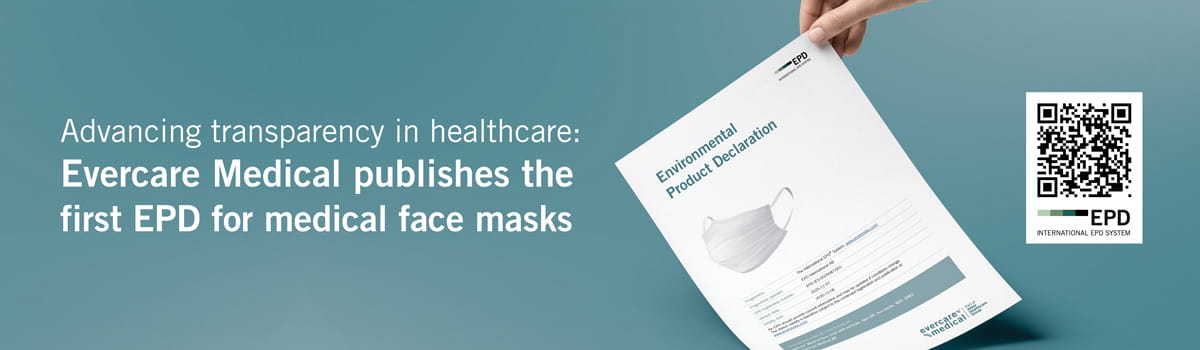
The COVID‑19 pandemic underscored the crucial role of medical face masks in infection prevention and control. Once confined to healthcare settings, masks quickly became a global necessity, familiarizing the public with their protective function. This surge in demand highlighted the scale of mask production, distribution, and disposal – emphasizing the need for transparent, standardized tools to assess and communicate their environmental impact.
Evercare Medical AB (part of Asker Healthcare Group) is therefore proud to announce the publication of this first EPD for a medical face mask, verified and registered within the International EPD® System. The EPD for evercare® medical face mask with earloops, type II R (REF 2881), marks a significant step towards standardized, transparent environmental data for medical disposables. It reinforces the value of life cycle assessment (LCA) in healthcare and advances the integration of environmental performance into product evaluation alongside clinical and economic criteria.
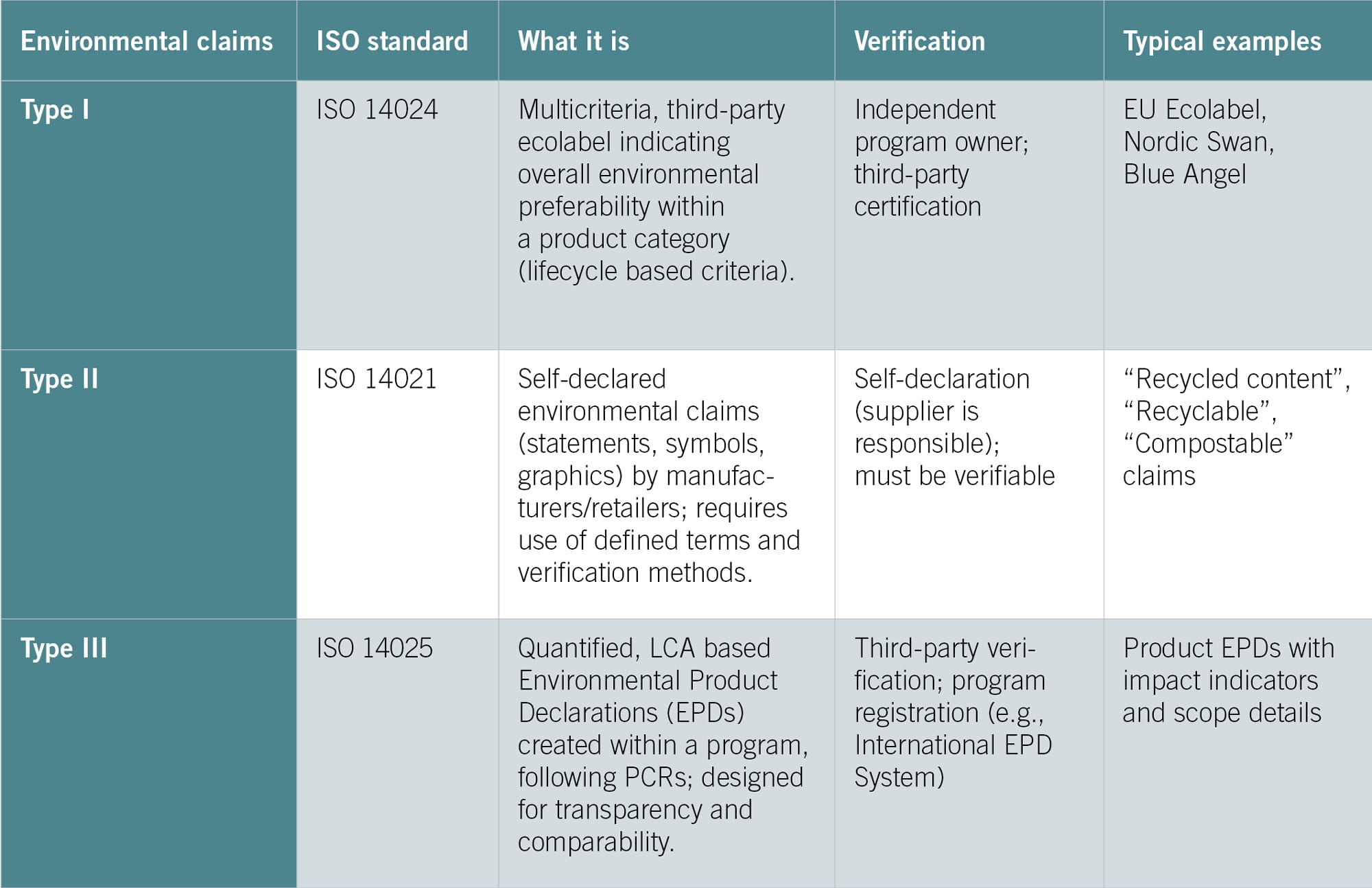
An Environmental Product Declaration (EPD) is a Type III environmental declaration defined by ISO 14025. It provides quantified, independently verified information on the environmental performance of a product, based on a full life cycle assessment (LCA).
Key characteristics of an EPD include:
For medical products – where procurement involves strict technical and regulatory standards – including verified environmental performance data represents an important step towards more informed, responsible purchasing decisions.
Product Category Rules (PCRs) are developed for specific product categories and form the methodological foundation for each EPD. They define how LCAs should be carried out and how the results are to be reported for a given product group. PCR 2017:01, covering disposable surgical drapes, gowns and face masks, sets consistent system boundaries, allocation methods and relevant impact categories for these products.
By adhering to this PCR, the EPD ensures that:
A milestone for Evercare Medical
The publication of this EPD marks an important milestone for Evercare Medical in providing the European healthcare sector with transparent, independently verified impact data. It also reflects Asker’s mission to drive a fair and sustainable value chain in which climate action is grounded in science and aligned with the GHG Protocol and Science Based Targets. Evercare Medical puts these principles into practice by applying life cycle thinking and communicating transparently, ensuring that all environmental claims are substantiated.
Developing and verifying this EPD required close collaboration across the entire value chain, from raw material suppliers to manufacturing and distribution. By subjecting this product to standardized assessment, Evercare Medical affirms its commitment to embedding environmental responsibility at every stage of product development and procurement.
The publication of this EPD under PCR 2017:01 marks a sector benchmark, setting a methodological precedent for manufacturers of disposable surgical textiles. It provides credible, standardized data for procurement, enabling hospitals and health authorities to integrate verified life cycle information into decision-making and improving comparability across products. By identifying key contributors to environmental impact, the EPD supports continuous improvement and advances sustainability goals.
More broadly, this EPD is a step towards standardizing environmental reporting in the MedTech sector, enhancing transparency for stakeholders, and advancing evidence-based sustainability. By providing robust LCA data, it enables organizations to make environmentally informed choices, as well as to incorporate environmental impacts into their GHG accounting and environmental assessments.
The LCA reveals that approximately three quarters of the total greenhouse gas emissions across the life cycle of evercare® medical face mask 2881 are linked to raw material production and supply. Of the remaining quarter, end-of-life treatment accounts for about 17%, highlighting the significance of waste management for single-use products. The rest is attributed to downstream transportation – 5.6% from international shipping and 2.5% from domestic distribution. These findings underscore the importance of material choices, waste handling, and logistics in reducing the environmental footprint of surgical masks.
Embra®, evercare® and SELEFA® are registered trademarks
OneMed Group Oy
Metsäläntie 20
FI-00320 Helsinki, Finland
+46 770 111 115
| Product | Price | Amount | |
|---|---|---|---|
|
|
Article number:
Brand:
Obsolete
Temporary inactive
Request for Quotation
|
|
|
The product can be replaced by the following produkt
| Product | Price | Amount | |
|---|---|---|---|
|
|
Article number:
Brand:
The product is currently in stock
|
||
We will use your registered email for communication.
You will receive updates about our products.
Warm welcome!
You request is registered. You will now receive news about product updates.
We were unable to find any results.
We were unable to find any results.
We were unable to find any results.
${DeleteUserModalOrganizationsCustomers.customerErpId} - ${DeleteUserModalOrganizationsCustomers.deliveryName}
| Name | |
|---|---|
| ${SelectedCustomer.customerErpId} - ${SelectedCustomer.deliveryName} |
Inactive customers cannot shop
No result